
Grandma's House – But Make It Scalable (Transmission #358)

WRITTEN BY: Jonathan Wasserstrum
[Adapted from an Unwritten Capital article.]
Senior housing occupancy just hit 89.5%. Five straight years of occupancy increases according to the National Investment Center for Seniors Housing & Care (NIC). And the silver tsunami that we read about in the news is only getting bigger.
But inventory isn’t growing to meet the need. Inventory grew 0.4% year over year last quarter—a record low across the twenty years NIC has tracked it. Units under construction are at their lowest level since 2012. KKR and Brookfield have been clamoring to acquire mega projects for the last couple years. But that’s still not enough.
Senior housing is running out of rooms. We aren't going to build our way out of the massive supply problem fast enough.
Curious? Additional examples.
Proptech's Leader has Been Crashing Our Couch the Whole Time // Stock in Down Payments // Banking Real Estate in the Clouds
The cheapest new supply in America may already be sitting on a cul-de-sac.
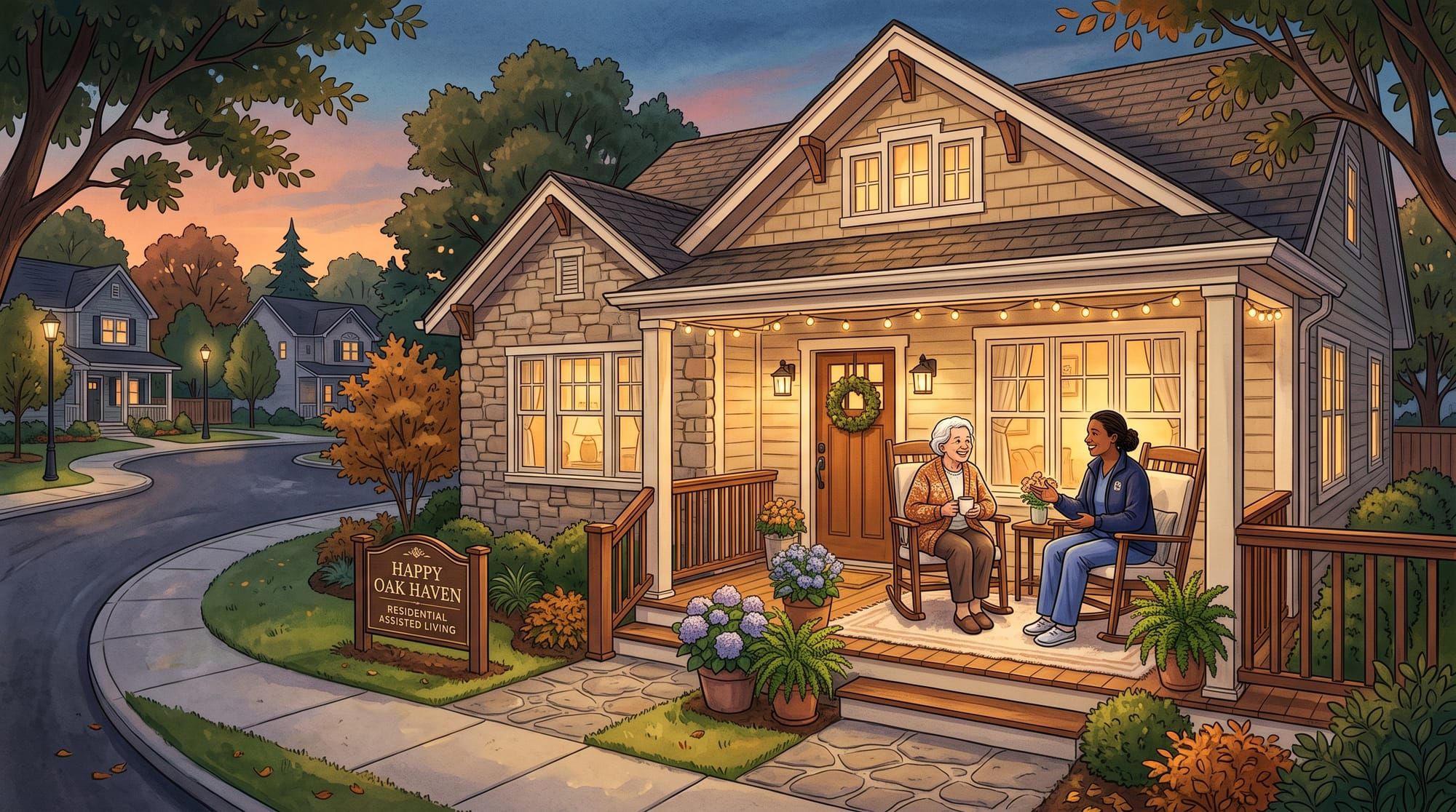
Homeshare Online, formerly Silvernest, is an example of home sharing focused on the silver generation. Residential assisted living (RAL) takes the shared-home concept further: turn a tiny fraction of existing housing stock into critical senior-care supply—and become the next fragmented cottage industry to institutionalize in the process.
THE SUPPLY ALREADY EXISTS
Take a single-family house. Retrofit it for accessibility. Staff it with trained caregivers. Fill it with a small group of residents who need some help getting through the day, but don't require the level of care provided by a skilled nursing facility.
That's it. No ground-up construction timeline with entitlement and permit battles. No armada of folks to oversee a $50 million development. No bidding war on projects that already exist. You're just buying housing stock that already exists, on streets that already exist, in every suburb in America.
Residents can have it better, too! You’re close to family. You know your caregivers by name. You eat at a kitchen table instead of a dining hall. It feels like a home because it is one.
Stats say we need 800k+ new units by 2030 to maintain the same utilization rate we have today for the 80+ population. That’s hundreds of billions of dollars of new construction. At the current pace of development, about 40% of that investment is on track to actually happen. If there was an economic slowdown that impacted development, we’d be even further behind.
Remember: Housing Housing Housing!
There are 82 million single-family homes in the U.S.
Converting a rounding error percentage of those into RAL moves the senior housing supply needle faster than development could.
Today the space is mostly small mom-and-pop operators. One home, maybe two. The care is there but the infrastructure is thin. The hard part is building the layer that makes hundreds or thousands of those houses work consistently. Staffing. Licensing. Compliance. Resident acquisition. Medication management. Billing. Training.
So RAL is a cottage business, right?